
AI mental health chatbots now have rules. In the first part of 2026, dozens of states introduced more than seventy bills covering them, and the common threads are clear: a chatbot has to tell you it is AI, it must not pretend to be a licensed professional, it needs to spot a crisis and point you to real help, and it has to take extra care with young people. If you use one of these tools, that is good news, and here is what it means in plain terms.
Why the rules arrived now
Support chatbots grew fast because they answer at any hour and cost nothing to open. That reach is genuinely useful for everyday stress, low mood, and learning coping skills. The worry is what happens at the edges. Studies through 2026 found that general and specialist models both handle ordinary conversations reasonably well, yet respond unevenly when someone raises self-harm. Lawmakers looked at that gap and wrote it into rules. One example, New York’s S 3008, requires systems that simulate human-like conversation to detect signs of suicidal thinking, offer crisis resources, and remind people they are talking to AI.
What the new rules ask for
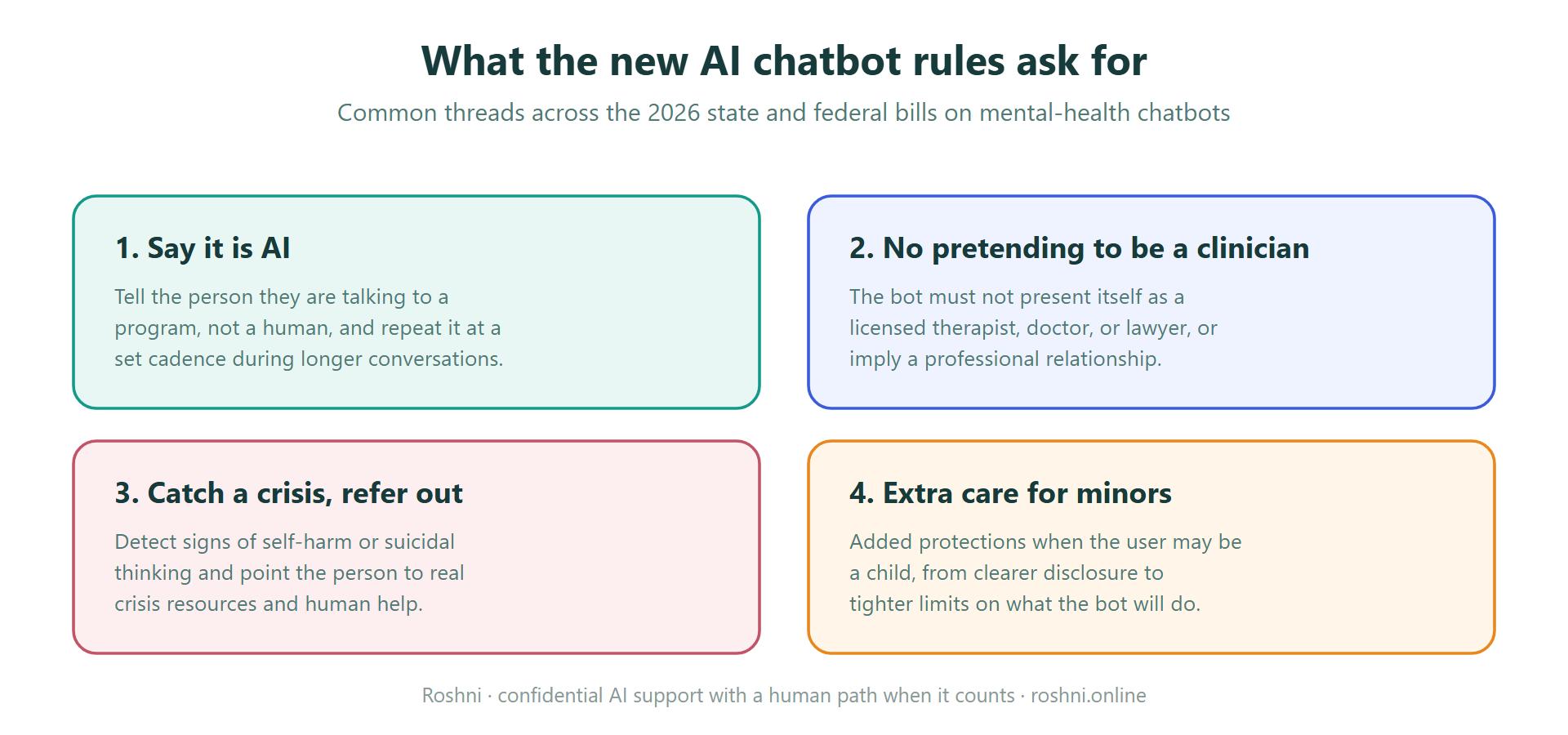
The details vary by bill, but four requirements keep coming up. First, disclosure: the tool has to say it is a program, not a person, and repeat that during longer chats. Second, no false credentials: it must not present itself as a therapist, doctor, or lawyer, or imply a professional relationship it cannot hold. Third, crisis handling: it has to recognise signs of self-harm or suicidal thinking and steer the person to crisis resources and human help. Fourth, care for minors: added protections when the user may be a child, from clearer disclosure to firmer limits on what the tool will do.
What good crisis handling looks like
The most important rule is the crisis one, because that is where a wrong answer does the most harm. A responsible tool checks each message for risk before it replies, and it changes course the moment something serious shows up.
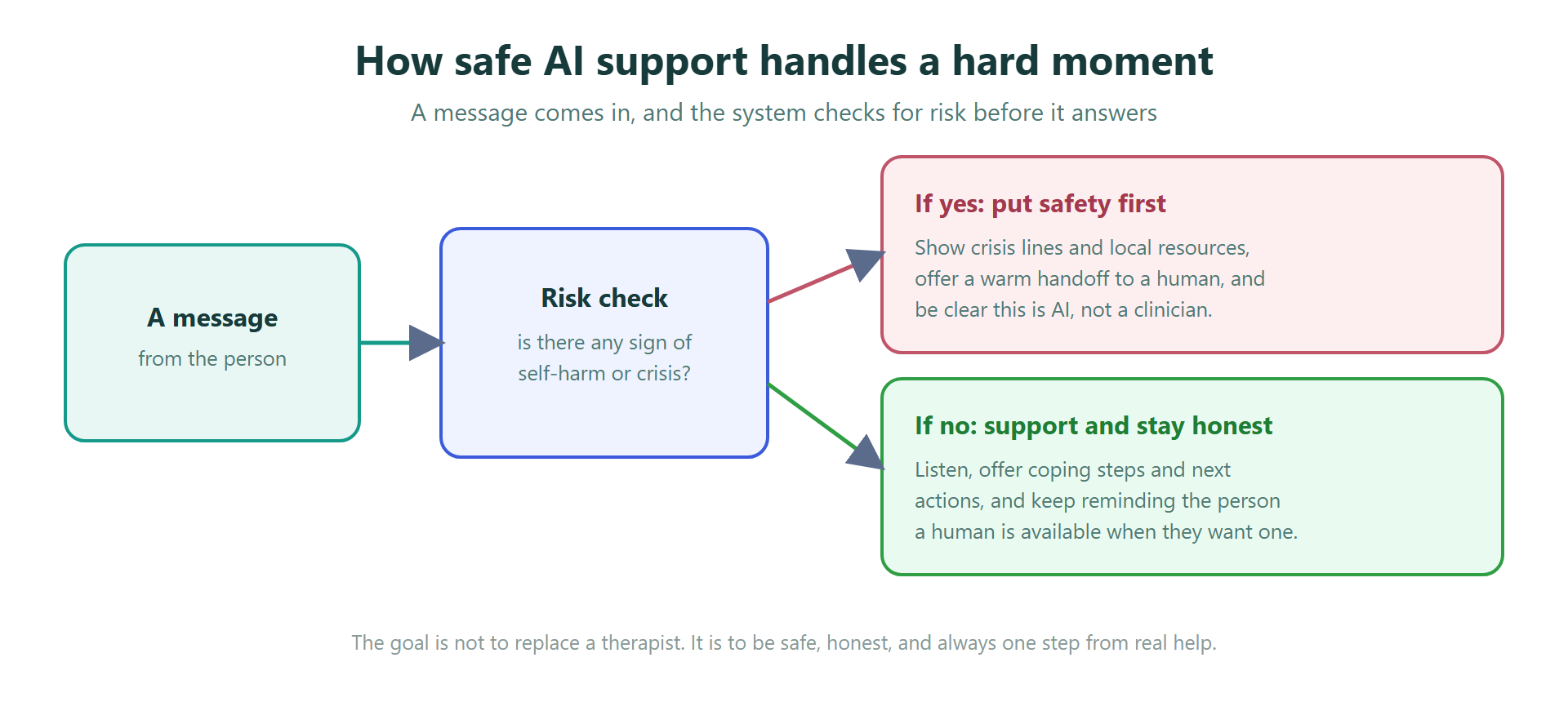
When there is a sign of crisis, safety comes first. The tool surfaces crisis lines and local resources, offers a warm handoff to a person, and stays honest that it is AI rather than a clinician. When there is no such sign, it can listen, suggest coping steps and next actions, and keep reminding you that a human is available whenever you want one. The point is not to replace a therapist. It is to be safe, honest, and always one step away from real help.
How this shapes what we build
At Roshni, this is how the AI support is meant to work day to day. It is clear that you are speaking with an assistant, it does not claim to be a licensed clinician, and it keeps a human path open for anything heavy. The same care runs through the legal guidance side, where the assistant offers general information and points you to a qualified professional for advice on your specific situation. Rules like these are not a burden on tools built this way. They describe what they already try to do.
If you are in crisis right now
If you or someone you know is in immediate danger, contact your local emergency services or a crisis line in your area straight away. An AI tool, ours included, is a starting point and a bridge to help, not a substitute for emergency care or a trained professional.
FAQ
Are AI mental health chatbots safe to use? For everyday support like coping skills and low-risk moments they can help, especially because they are available any time. For a crisis, they should hand you to human help, and the new rules push them to do exactly that.
Will an AI tool tell me it is not a therapist? Under the new rules it has to. A responsible tool discloses that it is AI and does not present itself as a licensed professional.
What should a chatbot do if I mention self-harm? Recognise it, put safety first, show crisis resources, and offer a path to a real person, rather than trying to counsel you through it alone.
Do the rules cover young users? Yes. Many bills add specific protections for minors, including clearer disclosure and tighter limits.
Can a chatbot give me legal advice? It can share general information, but for advice on your own situation you should speak with a qualified professional. The disclosure rules exist so tools are honest about that line.
The through line across all of these bills is simple. Be honest about what you are, be careful when it matters most, and keep a human within reach. That is a fair bar, and it is the bar worth holding any AI support tool to.
Recent Comments